Showing posts with label balinese. Show all posts

Alaya Ubud Resort Relaxing Oasis in Downtown Ubud


Serving as the base camp for our Ubud Food Festival activities is the charming hotel Alaya Ubud. Looks narrow and unassuming from the front, the hotel is actually big, just that it's stretched a couple of hundred meters deep.

Located next to the Yoga Barn, Alaya is easy to spot, and ample of parking spaces are available. There are three main attraction at this beautiful resort hotel: The room (definitely), Dala Spa, and Petani Restaurant with live music performance featuring Bali's best talents. During the day, Petani also serves as a good meeting ground with its elegant chic interior.

Around Alaya Ubud, there's a lot of attraction you can visit by walking, eliminating the need of a cab. A major supermarket sits almost right next to the hotel, 15 minutes walk to the Monkey Forest, and a lot of interesting restaurants and shops only a walking distance away.


The Stay


First, service is awesome, loosely structured and feels genuine, no cliche. With only 60 rooms capacity, this is among the luxury you can experience from the staff in Alaya Ubud. For example, when I got back from my talk in Ubud Food Festival, the guest relation staff recognized me almost immediately, even though I'm sure that was the first time we met. Wanting to quickly get out of my sweat ridden t-shirt from the earlier activity, I was then accompanied by a younger male staff, who's also already know me by name, all the way to my room where my wife and kids are waiting.

On the down side the walk to our room on the third floor was unexpectedly long, given the narrow-deep hotel layout and our room was located quite to the rear end of the resort. There's also no elevator or ramps available meaning we can't carry the baby stroller either.

The view was amazing though. While I'm no stranger to rice fields, since I grew up with rice fields surrounding my house and treat them as my playground, the view is soothing nonetheless. I heard that the hotel bought those rice fields around the hotel, just so it can be preserved as is.


The room itself was simply beautiful. I love how the design makes the room felt cultured, with the texture, colors, and artworks, but not bare traditional, as the in-room facilities and the honeycomb patterned door nicely adds the contemporary feels.

The bowl shaped bathtub with natural lighting was surely gained my 6 years old kid attention, who's favourite hotel activity includes either swimming, or bubble bath, or both. Both the shower and the bathtub occupied an open space though, divided only by curtain with the rest of the room. Suitable for couples and families with little kids, it might feels a bit awkward for those not used to open space bathrooms.

The room was spacious, and its bed was enough to fit the whole crew of 2 3/4 people (2 adults, 1 kid, 1 baby). And what begun as a joke to address the daybed as "kid's bed" ends up with our kid actually slept on it, believing that joke to be true.

Outside of the room (literally), the other wonderful feature of Alaya Ubud's rooms are the balconies. Facing the lush green rice fields, it's equipped with comfy couch perfect to snuggle with your loved one(s), while enjoying the fresh air of Ubud.

While Alaya also have afternoon tea down at Petani as complimentary of our stay, we skipped it as our agenda for the rest of the afternoon was to enjoy the luxury treatment of Dala Spa.

Mesmerizing Dala Spa


Located at the at the hotel's farthest end, Dala Spa's lobby is at the second floor and the treatment room downstairs at the ground floor. What's special with Dala Spa is that each room have different themes, all were elegant and mesmerizing in their own ways.

Surprisingly, Dala Spa also has their own Spa menu which includes a nice set of high tea, with array of unique tea blends.

As we took quite a lot of beautiful shots here, it's only proper to put the Dala Spa experience in its own article. Stay tuned.


Dinner time at Petani Restaurant


For the evening, I heads down to Petani Restaurant. The view turned into dramatic with the lights turned on.


As Mrs. Epicurina suddenly experiencing a terrible headache, I have to enjoy the dinner alone. A pity, but still enjoyable nonetheless, especially with the live entertainment by Bali's own prodigy music artist Balawan.


Known for his double necked guitar and his unique tapping method, Balawan performance that night was both joyful and stunning. Combining intricate tunes with Balinese elements, Balawan combine technical prowess with ethnicity nuance beautifully blend it. This is for sure not your usual dinner band.

Later during the end of his performance, Balawan was also joined by one of his audience in a three way "battle" of scatting, Djembe drum playing, and Balawan mimicking gamelan on his guitar!


To accompany the evening, I ordered Grilled Jimbaran Bay Tuna. Two slabs of thick and juicy tuna, stacked on top of purple potato puree and edamame beans. The tuna was marinated with Kintamani lime and soy sauce, lightly grilled to create the firm surface, while at the same time maintaining the pinky juicy tuna meat inside. Well done!

I did find the dressing of spiced orange reduction a bit challenging though, since the purple potato is already sweet, and the dressing was even sweeter.


Breakfast in Alaya Ubud

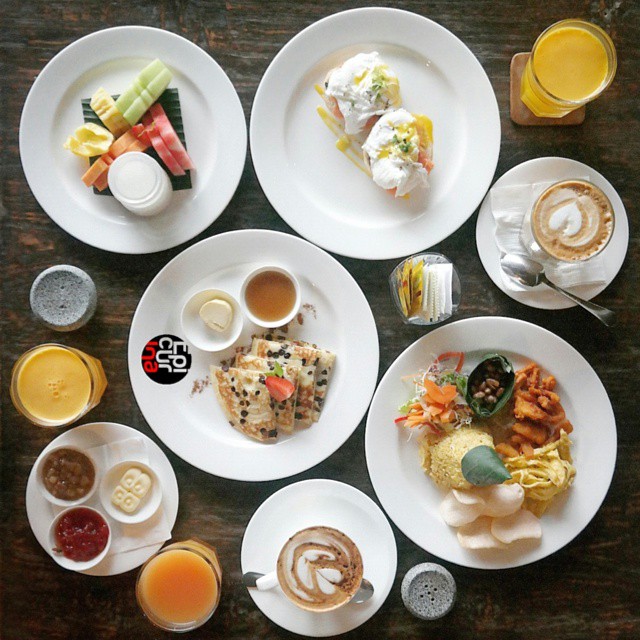
Several options are available for breakfast in Alaya Ubud, you can pick from the Indonesian Nasi Kuning Komplit, Eggs, or Pancake. I certainly went for the poached eggs, on top of toasted baguette, perfected by a layer of smoked salmon. Delish! I always love the moment I sliced the poached eggs open and let the runny egg yolks melted out.

We find the Nasi Kuning a bit too mellow for our local tastebuds though, while our kid certainly enjoyed his freshly made choco chips pancake.

All of the breakfast choices includes a set of sliced fresh fruits, juices, homemade yogurt, bread basket with homemade jams, and a choice of coffee or tea. While it's not a buffet breakfast, it's surely fulfilling.




Conclusion and feedbacks

On overall our stay was awesome, the staffs were attentive, their Dala Spa's High Tea has definitely one of the best savory snacks among all the high teas in Bali. We love the bedroom and the bowl shaped bathtub, and the balcony was relaxing.

I would love to see flavor enhancement on some of their food, and there should be a better way to address family traveling with babies, or with elders, as for both cases the long walk might be an issue.


Where's your favorite place to stay in Ubud? Share with us!

Thank you Alaya Ubud for introducing your lovely resort to our Epicurina readers. As usual, all opinions are of my own. (byms)

Halal Balinese Food in Warung Basang Bali

One of the biggest pleasure I have as a food blogger in Bali, is when I can present you dear readers, something new and uniquely Bali, and last week we found something perfectly fit that description named Warung Basang.


Located near the Krishna gift shop in Tuban, Kuta, Warung Basang serves quality Balinese food with affordable prices, and authentic home cooking Balinese dishes.

Warung Basang itself was born out of passion to preserve Balinese cuisine tradition, which contains many wonderful delicious dishes, including those less known to people outside Bali. That's why on the menu you'd find lots of interesting selections like Lawar Klungah which uses very young coconut shells (yes its shells!), with a crunchy rubbery texture. Or Tum Ares which uses young banana stalks, beside of the well known Bebek Betutu, or Sate Lilit Ikan Laut. 


For a modern and easy to like alternative, Warung Basang also serves creations like Nasi Goreng Bongkot which uses fragrant torch ginger root and white fish meat.

Aiming for authenticity, Warung Basang ensure they only minimally adjust the flavors to match domestic tourists' palate, including toning down the spiciness standard to better fit non-Balinese heat tolerance level. And we have testimonies from our fellow Balinese foodies in #Mekulicious to certify its authenticity.

That being said, I personally find the heat level of food in Warung Basang still sits on the top end of my heat tolerance range, however my lovely spouse think the spiciness level was just standard and fits her appetite really well.

For you spicy food lovers though, Warung Basang serves six different kind of Balinese sambal to please your appetite.


Outside of the heat factor, I found Warung Basang cooking is flavorful, rich, and memorable. Something I'd happily recommend even to my most reserved, judgmental, annoyingly truthful friends.

Halal Balinese 

What's even more interesting from Warung Basang though, it's something that's very rare in Balinese eateries: a halal standard.


Therefore if you've been wondering how Lawar taste, but was hesitant as you're following a no-pork dietary like majority of muslim are, here's your chance.

Upon asked why choosing halal Balinese concept, Warung Basang's owner Anindya Mantik (Indy) revealed that the decision was come after a thorough research, and her wish to preserve a family's culinary tradition:


The Tuban area was chosen since its close to the Ngurah Rai Airport, and quickly becoming a prominent destination for domestic tourists, especially with the development of new budget hotels in this stretch of street, not to mention the famous shops already residing in this street: Krishna souvenir shop, Joger Bali, and Nasi Ayam Ibu Andika.

While there's already some Balinese eateries in the area, Indy figured none caters a fully fledged Balinese menu yet. On the other hand, one of her fondest memory of childhood was the cooking of her grandmother from Tabanan, which despite her experience living abroad, kept lingering in her mind. 


Her decision to go Halal was further fueled by the fact that most domestic travelers are muslim, and they rarely touch Balinese dishes for fear that it contains pork, while in truth Balinese cuisine is not always about pork. That's why it's becoming her passion also to introduce the halal side of Balinese cookings.  

To ensure the Halal standard, Warung Basang employs a muslim female chef, and source their ingredients from muslim sellers in the nearby traditional market.

Lending her passion in fashion design, Indy ensures that your visit in Warung Basang creates a lasting impression with its comfy atmosphere, that's ornamented with snapshots from the past.


Warung Basang (@warungbasang
Jalan Raya Tuban 58A (next to Rahayu), 
Tuban, Kuta, Bali, 
Indonesia. 
Phone: +62 812 3632 0603

Kitchen Sessions: Bali

It's always been fascinating to know where Chef Will Meyrick headed for his next culinary journey. Why? Because he'll soon shares his journey, either in his travel blog, or in a Kitchen Sessions at one of his beautiful premises in Bali; Sarong in Petitenget, and Mama San in Seminyak. And Sarong this year, again receives a worthy notation in Asia's Mielle Guide Top 20 Restaurants 2013.

While he travels mostly around Asian countries, his recent trip is quite in the neighborhood: Bali. Was I ecstatic? For sure, Balinese culinary style has a lot of potentials, and I'm curious on how he will represent those into a fine dining cuisine.


The Visit

Mama San looks gorgeous in the afternoon; with its facade facing west, the setting sun creates this long shadows of everything, and bathed the restaurant's interior in its golden yellow rays.

Raechel was already there, in conversation with another guest for the Kitchen Sessions that night. After being introduced, I excused myself to capture the beautiful moments.


Since Chef Palm Amatawet was already manning his station, so I greeted him and managed to capture this picture of him in action, with his signature wide smile.


While waiting for all the guests to arrive, we were presented with this Balinese finger food which made from the spicy tangy Ayam Pelalah, wrapped in Betel Nut leaf and created this wonderful taste mix. (I eat three or four portions by the way; that good!).

The Dinner

As the food is ready, and all the guests seated, Will Meyrick greeted us, and as usual gave us introduction on the dinner theme for that night. Kitchen Sessions: Bali was born out of his interest in the cuisine of his own neighborhood, his home: Bali. He also explained that everything presented on that dinner are still using original Balinese seasoning; no messing around with the ingredients, and what he's altering is only its composition and balance.

"What you'll be missing though, are plates that wiped with dirty napkins, and food that's prepared with same hands used in handing out changes money to the buyers" said Will Meyrick jokingly.

Will also made a special note that all of the dishes recipe for that evening are came, from Sarong's own "secret weapon", Balinese Chef Budiana. Having been working together for so many years, Will is eager to introduce Budiana. This is important especially with him busy preparing the launching of his latest creation "E&O" in Mega Kuningan Jakarta, Budiana will be overseeing Will's homebase during he's away.


While Hendra is quite camera-conscious :), I couldn't get a good shot in such low lighting, so please excuse this rather candid shot of Chef Budiana. 

As with the dinner menu, for you familiar with Balinese cuisine then you'll find them easily recognizable: common, everyday sold Balinese dishes, right from the streets of Bali. Ready for the journey? Here we go:

Sup Kepala Ikan (Fish Head Soup)


I've read somewhere that serving whole fish to a westerner is a crazy idea, since westerners don't eat a face, hence a fish head soup must be a big no no. Well I had to admit that once, the idea of eating something's face is gross for me too, however after curiosity took over and I got introduced into Balinese Fish Head soup, there's no turning back.

Once you managed to "learn" it (ow yeah baby, it's an acquired taste), consistent with the rules that once a food with an acquired taste is liked, there's no substitute to it; now Fish Head Soup is among my favorite Balinese dishes.

Mama San's fish head soup though, came in a more subtle appearance: sliced snapper meat, in the familiar taste of Balinese fish head soup. What's different though, and I almost moaned out in excitement, is the flavor tuning that introduces heavy amount of sourness; something that's missing from its street food cousins.


The snapper meat itself is succulent and smooth, easily one of the most beautiful dish of that dinner.

For those who prefer the genuine eating experience of a fish head soup though, there's a whole snapper head presented on the table as well. However I hold myself from devouring the dish as eating a whole fish head requires time, patience, and sloppy hands; while the dinner is still early and I didn't want the gigantic head to stall my progress.


I did managed though, to scoop one of its eyes out, and devour the gelatinous fillings inside. A habit that turned out Raditya on the next seat fancy as well.

Udang Bakar Bumbu Plecing (Grilled Prawn in Plecing Sauce)

Coming up next, Will Meyrick's experiment on Plecing sauce. Well known for its super spicy flavor, Plecing applied at the dinner was resided on a more moderate level, meaning you still get the flavorful character of Plecing without having to sweat all over it.


The Udang Bakar Bumbu Plecing itself was accompanied by the Pepes Klengis (snapper with roasted coconut sediment), and Lawar Rumput Laut (Seaweed salad) which closely resembles Pulau Serangan's Jukut Bulung.

The grilled prawn itself tasted a degree too raw for my taste, since it still has this amaebi (sweet shrimp sushi) flesh character, but the dish itself is again, easy to like.

Serapah Sapi With Sup Buntut Ares (Beef Serapah with Banana stem and oxtail soup)


Among the dish I haven't been able to taste during my 3+ years of living in Bali, is Serapah; while it's name immediately reminds me of cursing ("sumpah serapah" means cursing in Indonesian), and on second thought it reminds me of a giraffe (Jerapah in Indonesia), this dish remotely resembles those two. It's a very exotic dish that immediately screams "rustic" and "delicious" at the same time.

The use of beef short ribs is perfect in this dish, since its strong beefy aroma mixes well with this Balinese version of black-pepper sauce. Its unique moderate peppery spiciness is the result of using Balinese Long Pepper.

What I found beautiful as well is the inclusion of chunky slices of kikil into the dish which adds to the texture.

Lawar


Next came the iconic dish of Balinese cuisine: Lawar. Usually presented only in traditional ceremonies, it finds way some while ago into everyday meal.

Still considered challenging by some, Lawar is a wonderful dish that truly represents Balinese taste; you should try this at least once in your visits to Bali.


The pork Lawar as pictured above, praised by many of the Balinese-based guest as really delicious. As for myself on the other hand, considering that was the first time I encountered Lawar too (now I admit it), can't make a comparison but found my beef Lawar really enjoyable. What I recognized immediately though, is the taste and aroma of corned beef, and strong traces of fried shallots.

Bebek Betutu (Balinese Roasted Duck)


What came next is the gigantic leaf parcel with burn marks, that emits a lovely herbal scent: it's the Bebek Betutu; Balinese Roasted Duck.


Preparing it on the other hand, was quite tricky, carving a Bebek Betutu it is not an easy feat, even for the experienced people at Mama San. Well some dishes are best eaten bare hand though, that's for sure.

Taste wise however, it's among the most succulent, creamy, smooth poultry I've ever had. With the smokey aroma sneaks in between the duck's mellow taste, and flavors lent by its herb-rich stuffing, it's another favorite from the dinner that night.


The Jukut Undis soup that accompanied the dish was also a good pairing; flavorful without being overpowering, it's among Balinese dishes that deserves more attention.

The cassava leaves in base genep seasoning is another good treat, but it just couldn't shake off the lingering taste of Bebek Betutu.


Desserts


To close our dinner, there's a variety of Jajan Bali usually found in traditional markets; however they're done with better ingredients so it was a new experience as well.


Some of the guests found them too sweet and they're maybe right, but taste wise they're simply good. A good closure to the taste journey Kitchen Sessions: Bali delivers that night.

The Aftermath


As always, some of the menu tasted in Kitchen Sessions will make it to Mama San's regular menu, while some don't. As winners of that dinner I'd surely recommends Bebek Betutu, Sup Kepala Ikan, and Serapah. The other dishes are wonderful but for me those three each represents the succulent, tangy, and robust character of Balinese cuisine.

And it's nice to see how a common daily Balinese dishes could be transformed into a fine dining experience, while still retaining its original characters. Thank you for the invitation Chef! (byms)

Event: Denpasar Festival 2012

Among the best culinary event in Bali to go to, is the Denpasar Festival that held annually each December. What makes it a bit troublesome to visit it though, is the heavy rains that frequents December. I wish the city official could move it outside the rainy seasons, or perhaps make it twice a year; for the food festival section at least.


During this event, different food from different parts of Denpasar are showcased. While the theme of each year seems to differs a lot, like there was a Legendary Cuisine section back in Denpasar Festival 2009, in Denpasar Festival 2012 there was none. While lacking what I consider as the most important part for foodies to sample bests of Denpasar street food, there was still a lot of varieties to choose from.


While obviously there were a lot of pork, like the pork satay photographed above; and usual stalls that I've seen and been to before; giving my already 3+ years of living in this beautiful island, there were still surprises awaits. One of the example, is the Sate Lilit Salmon.

Sate Lilit Salmon

Marketing on Salmon's health benefits, Warung RA Salmon offers several set menus that proven to be a success; because early in the afternoon they're already running out of most of the items. What's left though is the rather unique Sate Lilit Salmon, which I found was more interesting to try than Salmon steaks, Salmon nuggets, or whatever western dishes version made with Salmon. This is Bali, and it's good to see that people in the food industries are still willing to innovate and experiments.


Though as experiments might go wrong, I still find the regular Sate Lilit Ikan favorable over this innovation. While I can still taste the salmon very well, its combination with Bali's base genep seasoning, a moderate amount of chilly  and sweet glazing requires some time to get used to. I guess salmon's strong taste are best nurtured instead of contested. Perhaps the experiment has a better result in the monochromatic tum, or pepes? I can only imagine they do.

Vegetarian Dishes

Another kind of dishes I'd always curious to try is vegetarian. Not for its health benefits or religious reasons, but to see how this specialty culinary has grown.


Having visited a Vegetarian food expo 10+ years ago in Jakarta, where I got a chance to taste many of it's 300 different dishes, I'm a bit disappointed that here in Bali, I didn't find any mushroom in the vegetarian dishes I have sampled. Even if you want to go purist; resorting on real vegetables instead on those meat-imitation ingredients, mushroom is a great ingredients to flavor your cooking.

There was this beef jerky look alike that was made from green beans, however taste wise they almost have no taste except for the grainy earthy over dehydrated beans sensation.

The Sate Lilit made from tahu was pleasing though, but it's no surprise since perkedel tahu is quite a common dish in my mother's cooking.

Visitors

While we were enjoying our meal, the rain suddenly pouring down, hence we need to stay where we are. The side effect of it though, is that we got to meet other Festival goers, like these sisters from Karangasem, who drove all the way just to visit Denpasar Festival. Having a chatty kid helps a lot too, as it's an effective ice breaker among strangers.


The Closure

Missing many of 2009's unique dishes, like Sup Bulu Babi Pulau Serangan (very putrid taste but unique nonetheless), or the Lawar Nyawan, which made using bee's nest, I still managed though, to find some of Denpasar's unique culinary like the Sate & Tongseng Alu (monitor lizard); however (again) they're marketed more as medicinal food instead of savory treats, where I assume they're made just to become bearable; hence making me reluctant to try them.

In the end, we did more of walking around, and due to the rain we couldn't do much of that either. We made it to stop at a dessert stall though, selling many of Bali's best desserts, including the simplistic yet flavorful Es Daluman.

See you in Denpasar Festival 2013. (byms)


Event: Denpasar Festival 2012 Kotaku Rumahku


For those interested in tasting unique Balinese cuisines, there will be "Denpasar Festival" event held towards the end of December 2012 in Denpasar, Bali, Indonesia. As always, Denpasar Festival will presents authentic Balinese cuisine from around Denpasar, including those that are considered as legendary like Mak Beng and Nasi Ayam Kedewatan.

Among the highlights from last years are: Ayam Betutu, Balinese chicken rice, Sate Lilit (minced satay), water snail satay, sea urchin soup, banana stem's soup, fish head soup, and surely the famous Balinese suckling pig. (byms)

Food Note: Sup Bulu Babi ala Pulau Serangan

Salahsatu highlight dari acara Denpasar Festival 2009 adalah berkumpulnya makanan-makanan khas dari seputar daerah Denpasar, salahsatunya; dari Pulau Serangan. Kalau pada tulisan sebelumnya saya menuliskan mengenai nikmatnya makan Tongkol Bakar di Pulau Serangan, serta gurihnya krupuk Klejat, maka kali ini di salahsatu stand Denpasar Festival saya berkesempatan mencoba jenis masakan khas lainnya dari pulau nelayan ini: Sup Bulu Babi.

Bulu Babi atau Landak Laut adalah hewan laut yang hidup di perairan dangkal, memiliki duri-duri tajam yang panjang dan rapuh sebagai pertahanan diri, hewan yang satu ini merupakan salahsatu bahaya alami bagi para penyelam, karena luka tertusuk duri Bulu Babi ini bisa mengakibatkan infeksi yang serius. Walaupun merupakan negara maritim, Bulu Babi merupakan makanan yang relatif kurang dikenal di Indonesia sehingga tidak dibudidayakan secara komersil. Padahal di negara Jepang sana, kelenjar reproduksi hewan ini (gonad) adalah salahsatu topping Sushi yang digemari dan memiliki nilai komersil tinggi dengan nama "Uni". Secara internasional, hewan ini dikenal dengan nama "Sea Urchin".

Di Pulau Serangan, hidangan ini dinamai "Sup Toro-Toro", dimana jeroan cangkang Bulu Babi ini dimasak dalam sayur bening agak pedas. Berhubung saya belum pernah makan Uni Sushi, maupun masakan lain dari Bulu Babi, makanya waktu memesan hidangan satu ini nggak ada dugaan apa-apa di kepala. Malah saya memesan langsung dua ekor, optimis dengan food experience yang akan saya rasakan. Apalagi hidangan ini disajikan dengan presentasi yang cukup menggugah semangat bertualang rasa saya; si Bulu Babinya ditampilkan masih dalam cangkang, dengan sedikit duri-duri yang masih menempel di bagian luarnya. Setelah kita memesan, barulah si cangkang si Bulu Babi dirusak, dan isinya disendok keluar untuk dicampur dengan kuah sup. Rasanya..?

Dengan warna daging yang kuning coklat keunguan, dan tekstur yang lembek mirip pepes perut ikan, ternyata jenis makanan yang saya sebut terakhir itulah yang paling mewakili rasa Toro-Toro ini; anyir dan amis, sedikit manis menjurus pahit, mirip rasa lemak di perut ikan. Hanya saja teksturnya lebih ke halus bersagu, dibanding perut ikan yang cenderung jelly-ish dan lebih kenyal. Salahsatu makanan paling menantang sejauh ini yang pernah gw rasakan. Very acquired taste.

Yang bikin penasaran, di Sup Toro-Toro ini kelihatannya yang dipakai adalah seluruh isi cangkang si Bulu Babi, berbeda dengan Uni Sushi yang hanya menyertakan bagian gonadnya saja. Apakah ini yang membuat rasa sup ini ekstra amis? Apalagi ternyata bumbu kuah supnya sendiri tidak terlalu banyak menolong; hanya sedikit asin dan sekilas pedas, berbeda jauh dengan asumsi awal saya kalau kaldunya akan seperti dashi nya Jepang yang gurih dan strong itu. Jadi kesimpulan saya setelah menikmati Sup Toro-Toro adalah; ini jenis makanan yang masih perlu dikembangkan lagi, dengan penambahan bumbu yang lebih tajam misalnya, dan treatment khusus pada bahan dasarnya untuk menghilangkan si rasa amis yang mengganggu, karena dengan cara masak seperti ini cenderung kurang menampilkan karakter khas rasa daging Bulu Babi... kalaupun ada. Saya cuma bercermin dari kebiasaan masyarakat Jepang menikmati Uni Sushi, yang berarti seharusnya ada karakter rasa yang plus dari hewan satu ini.

Walhasil, walaupun dua ekor Bulu Babi hanya memiliki daging sekitar dua sendok makan, namun sepertinya hidangan ini nggak habis-habis dimakan. Masih untung dalam memesan Sup Toro-Toro ini saya memesan juga ketupat, dan Jukut Bulung (urap rumput laut) yang lumayan ampuh menetralisir rasa amis si Sup Bulu Babi. Lain kali dalam menghadapi hidangan yang benar-benar asing saya harus lebih rendah hati... pesen satu saja dulu.

Selain dari dibuat sup, Bulu Babi di stand Pulau Serangan ini disajikan juga dalam bentuk pepes (5K), sedangkan versi gorengnya nggak saya temukan. Ada yang pernah mencoba juga? Gimana pengalaman anda? (bay)

Appearances